SHUNAFFoZ (Festival) 2012
- 1
- 2




Subtitling Zambian Languages for Audiences Around the World
A film can travel far beyond Zambia, yet its emotional force may weaken when Bemba, Nyanja, or Tonga is compressed into a quick English translation. Subtitling these languages for global audiences involves much more than replacing spoken words with readable text. Translators must preserve humour, respect, social relationships, cultural references, rhythm, and the personality of each speaker.
For Australian viewers, this work matters across cinema, streaming, education, diaspora communities, and international festivals. A documentary screened through SBS On Demand, a short film selected for a festival in Melbourne, or a community screening in Western Sydney may reach people with very different levels of familiarity with Zambia. Good subtitles provide access while allowing the original language to remain present and meaningful.
Language Carries More Than Literal Meaning
Bemba, Nyanja, and Tonga each have their own vocabulary, grammar, idioms, and speech patterns. A phrase that sounds natural in one language may have no direct equivalent in another. Translators therefore need to understand intention rather than simply match words. A teasing remark between friends, for example, can become rude or strangely formal if the relationship between the speakers is ignored.
Meaning also changes with tone and context. A short expression may communicate respect when spoken to an elder, confidence among peers, or irritation during an argument. Titles, kinship terms, greetings, and forms of address often carry social information that English subtitles cannot reproduce in full. The translator must decide whether to retain the original term, add a concise explanation, or express the social meaning through the surrounding line.
Subtitling teams may also encounter code-switching between a Zambian language and English, especially in urban settings, workplaces, schools, and conversations involving younger speakers. Removing every English phrase can make a character sound less authentic. Leaving every expression unexplained can confuse international viewers. The strongest approach identifies which switches reveal identity, status, education, location, or emotion.
Orthography, Dialects, And Consistency
Written forms are essential when preparing subtitles, but language variation can complicate the process. Speakers may use different spellings, regional vocabulary, or informal forms in transcripts and scripts. A production team needs a clear style guide covering punctuation, names, repeated phrases, numbers, place names, and terms that should remain untranslated.
Dialect is equally important. A word used in one part of Zambia may be unfamiliar elsewhere, even among speakers of the same broad language. Bemba dialogue from the Copperbelt may carry different local colour from speech in another region. Nyanja used in Lusaka may reflect urban vocabulary and frequent English influence, while Tonga dialogue may require careful attention to regional pronunciation and cultural setting.
Research should begin before filming or editing. Producers can commission native-speaking transcribers, consult cultural advisers, and record alternative spellings during interviews. Organisations working in Zambia can also benefit from specialist industry networks and reference material, including national arts resources that help filmmakers understand the wider creative environment.
Timing Dialogue For Real Viewers
Subtitle quality is shaped by time as much as translation. A line may be accurate on paper but impossible to read before the next shot. Fast dialogue, overlapping speech, singing, shouting, and pauses all create different timing problems. Translators must decide what can be condensed without removing a crucial detail or changing the character’s voice.
Bemba, Nyanja, and Tonga may express an idea with a different number of words from English. Literal translation can produce long captions that disappear too quickly. Condensation requires judgement: a repeated greeting may be shortened, while a culturally important proverb may deserve extra screen time or a carefully phrased equivalent.
Australian distributors also expect subtitles to meet practical accessibility standards. Viewers may watch on a mobile during a Sydney commute, on a television in regional Queensland, or through a festival platform with adjustable caption settings. Lines need sensible breaks, readable punctuation, speaker identification where necessary, and accurate sound descriptions when subtitles are intended for Deaf and hard-of-hearing audiences.
The distinction between translated subtitles and captions should remain clear. Translation communicates dialogue across languages. Accessibility captions may also describe music, off-screen voices, a ringing phone, or changes in tone. A global release may need both a clean subtitle file for general audiences and a fuller caption version for accessibility delivery.
Cultural Context Without Overexplaining
A proverb, joke, song lyric, or reference to local history can be central to a scene even when an international viewer does not recognise it. Translators must preserve the effect of the line, not merely its dictionary meaning. A word-for-word version may be accurate yet fail to communicate why the audience in Zambia laughs, feels tension, or understands a character’s social position.
Explanatory subtitles need restraint. Adding a long note at the bottom of the screen can interrupt a dramatic moment. In many cases, a concise translation that keeps an important name or term is more effective than a heavy explanation. Programme notes, filmmaker interviews, or a glossary on a festival website can provide context outside the film itself.
The Australian market has its own expectations around cultural care. Viewers may be familiar with language preservation debates involving Aboriginal and Torres Strait Islander communities, including the importance of community authority over representation. That awareness can encourage better practice when handling Zambian languages: involve speakers in review, pay cultural consultants fairly, and avoid treating language as decorative background.
This approach is useful for screenings at events such as the Adelaide Film Festival, Brisbane International Film Festival, or community programmes in Melbourne. It also helps a film speak naturally to Zambian Australians, African diaspora audiences, and curious viewers who may appreciate hearing a line in its original form rather than seeing every cultural detail flattened into generic English.
Building A Reliable Subtitling Workflow
A dependable workflow separates transcription, translation, review, timing, and technical delivery. First, the team should create a verified dialogue transcript with speaker names, uncertain phrases, songs, and overlapping speech marked clearly. A second native-speaking reviewer can resolve unclear audio before the translation stage, reducing errors caused by guessing.
The translation should then be reviewed against picture, because meaning often depends on gestures, editing, setting, or what a character has just seen. A professional subtitler checks reading speed and line length, while a language reviewer checks naturalness. A final cultural review can identify unintended changes to humour, respect, sexuality, religion, or historical references.
File preparation is part of the creative process. International distributors may request formats such as SRT, WebVTT, or broadcast-specific files, each with different technical requirements. Names and accents need consistent encoding, and subtitle events must align accurately with speech. A master version should be retained before creating platform-specific adaptations.
For a Zambian production organisation, this work can support both local storytelling and international circulation. Vilole Images Productions connects film development, production, post-production, exhibitions, and the Shungu Namutitima International Film Festival of Zambia. Such networks can help filmmakers plan language access early rather than trying to repair subtitles just before a submission deadline.
| Language | Common subtitling consideration | Potential global audience risk | Useful production response |
|---|---|---|---|
| Bemba | Regional variation, idioms, English code-switching, relationship-based forms of address | Literal English may lose humour or social hierarchy | Use native-speaking review and preserve meaningful local terms |
| Nyanja | Urban and regional vocabulary, changing informal usage, dialogue rhythm | Captions may sound overly formal or erase character identity | Match register to each speaker and test subtitle timing in context |
| Tonga | Cultural references, proverbs, local pronunciation, limited specialist resources | Important context may be mistranslated or overexplained | Commission language expertise early and create a project glossary |
The best subtitling process treats Bemba, Nyanja, and Tonga as living languages rather than obstacles between a film and its audience. For filmmakers seeking international reach, careful language planning can protect cultural authenticity, meet Australian accessibility expectations, and make a Zambian story easier to discover without making it less Zambian. Support productions that invest in skilled translators, cultural reviewers, and accurate caption delivery so every voice can travel with its meaning intact.
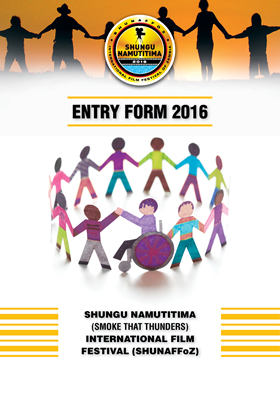
SHUNAFFOZ 2016 Entry Form
Featured Articles
- 1
- 2


SHUNGU NAMUTITIMA INTERNATIONAL FILM FESTIVAL (SHUNAFFoZ) 2015
Vilole Images Productions is glad to invite filmmakers to submit documentaries, short films and full-length films to the Shungu Namutitima International Film Festival of Zambia (SHUNAFFoZ). The festival will run from Friday 21st to Saturday 29th August 2015 in Livingstone and from Wednesday 19th to Saturday 22nd August 2015 in Kabwe. Deadline for submissions is Monday 22nd June 2015. Celebrating the 10th Anniversary, under the theme ''DARE TO DREAM, MAKE A DIFFERENCE'', the festival will accept Zambian and African films in competition. However, films from all over the world are for screenings ONLY. the 10th Anniversary will introduce another special award - the Artists Rights Award.
Read more
SHUNGU NAMUTITIMA INTERNATIONAL FILM FESTIVAL (SHUNAFFoZ) 2015
Vilole Images Productions (VIP) is glad to invite filmmakers to submit docuentaries, short films and full-length feature films to the Shungu Namutitima (Smoke That Thunders) International Film Festival of Zambia (SHUNAFFoZ). The festival will run from Friday 21st to Saturday 29th August 2015 in LIVINGSTONE and from Wednesday 19th to Saturday 22nd August 2015 in KABWE. Deadline for submissions is Monday 22nd June 2015. Celebrating the 10th Anniversary, under the theme ''DARE TO DREAM, MAKE A DIFFERENCE'', the festival will accept Zambian and African films for competition. However, films from all over the world are for screening only. The 10th anniversary will introduce another special award - the Artists Rights Award
Read moreFeatured Video
Visitors Counter


|
Today | 128 |

|
Yesterday | 1858 |

|
This week | 1986 |

|
Last week | 10247 |

|
This month | 5326 |

|
Last month | 44630 |

|
All days | 626767 |
Your IP: 54.173.35.129
,
Today: Dec 04, 2017