SHUNAFFoZ (Festival) 2012
- 1
- 2


When Horror Lives in the Sound
A shadow moving across a doorway can suggest danger, but a floorboard groaning beneath an unseen step can make the whole room feel unsafe. Horror is therefore an acoustic experience as much as a visual one, even when the loudest moments arrive as pictures on a screen.
The claim that sound design matters more than visuals in horror films is not an argument against striking cinematography. It is a reminder that audiences experience cinema with their ears as well as their eyes. A strange voice, a damaged radio signal, or wind moving through an empty street can establish another world without showing a single monster.
That distinction is valuable to filmmakers in Zambia, Australia, and everywhere between. It rewards small budgets, since a recorded whisper may carry more tension than an expensive creature effect. It also gives directors a way to guide attention precisely, sustain suspense after a scare, and make a fictional space feel physically real.
Seeing is only half of the encounter
Viewers know when a monster is on screen because they can see it. By the time a masked figure fills the frame, suspense has already been shaped by footsteps that stop too soon or breathing that comes from the wrong direction. Sound works beyond the frame, allowing a director to imply that something is present just outside the audience’s view.
Images are often remembered as scenes, while sounds are remembered as sensations. The rattle of a cage, a lift motor grinding between floors, or a telephone ringing in an empty flat can return years later with astonishing clarity. Sound can plant information, distort interpretation, and make a later reveal feel inevitable rather than arbitrary.
Picture and sound should never be judged only as separate departments. A beautiful shot of a forest becomes convincing when insects, wind, distant traffic, and the crunch of boots occupy distinct spaces. Conversely, an ordinary image becomes disturbing when its soundtrack contradicts what the eye sees. A clear sonic point of view turns atmosphere into storytelling.
The hidden grammar of fear
Fear has an acoustic grammar. Low-frequency movement can create physical unease, but context gives the rumble meaning. A generator outside a home sounds industrially different from a heavy vehicle idling nearby. One may suggest safety; the other suggests intrusion.
Spatial cues are even more important. A knock heard behind the viewer, dialogue leaking through a wall, or footsteps moving from left to right can map a location without a wide establishing shot. When sound and image disagree, the audience becomes alert. That alert is valuable suspense, especially in a home invasion film where every corridor may conceal an unseen presence.
Silence has rhythm as well. Removing all sound at the wrong moment feels artificial, while a carefully preserved pocket of quiet can feel deafening. Sudden loudness works best after the ear has adjusted. Horror mixes gain force by contrast: they prepare an acoustic floor, interrupt it, and leave the audience listening for what should return but does not.
Horror down under has a distinct acoustic map
Australian horror can draw on a specific acoustic map. In Sydney, traffic drains through tunnels, apartment blocks hum with lifts, and coastal wind pushes through narrow streets. Melbourne offers another palette: trams rattling over tracks, leaf blowers on quiet mornings, and weather changing within a single commute. Neither city needs to look haunted for familiar sounds to become threatening when used selectively.
Daily habits shape how audiences receive that sound. Many commuters wear headphones on trains or buses, while families often watch late at home after children have gone to bed, with an appliance cycling on in the kitchen or rain striking the windows. These ordinary sonic cues are available everywhere, but directors must capture them cleanly enough to place them convincingly inside a scene.
Australian genre films reach cinemas, services such as Netflix and Stan, and festivals that welcome unsettling work. Classification is a production concern: the federal Classification (Publications, Films and Computer Games) Act 1995 and the Australian Classification Board determine ratings, with MA15+ and R18+ familiar to ticket buyers.
A practical guide to building fear with sound
The strongest sound work starts before the cameras roll. A director can draft a sound map, decide where the audience is allowed to look, and ensure dialogue, effects, ambience, music, and silence support one emotional direction. This prevents the common mistake of adding louder layers when a scene feels weak rather than fixing the information the audience is missing.
After filming, a sound editor can build the imagined space by combining dialogue, Foley, effects, recordings, and designed tones. Vilole Images Productions explains this stage in its guide to sound design practice, where dialogue intelligibility, environmental consistency, and emotional impact are treated as connected concerns rather than finishing touches.
Recording the world
- Capture location ambience at several times of day.
- Record isolated Foley for footsteps, doors, breath, and cloth.
- Keep consistent room tone for editing.
- Note every real noise that the script assumes is absent.
Mixing the tension
- Preserve silence around important reveals.
- Let low-frequency elements build gradually.
- Reserve sharp high frequencies for moments of sudden threat.
Checks should happen on studio monitors and consumer headphones, since some Australians watch at home while others encounter the work in a cinema. The mix must reveal important details without flattening the space. Listening in a quiet room after a street recording also helps editors identify distracting hum, traffic, or birds that the crew stopped noticing.
Silence can be louder than a scream
A horror mix should not ask every element to shout. Footsteps need enough space around them to register, and a pause after dialogue may contain more tension than another line. This restraint also makes sudden effects more potent. If constant creaks and stingers fill the track, the audience has no acoustic baseline left to violate.
The experience is amplified in communal viewing. During village cinema screenings, the sound of an audience, the hum of a projector, and an open venue can become part of the film’s presence. These uncontrolled elements may be imperfect for strict continuity, yet they give a story a shared pulse that a private living-room screen cannot reproduce.
That difference explains why streamers should not assume a home mix is automatically safer. A film designed for communal spaces may need room for reaction, while a domestic mix needs finer detail because headphones sit close to the ear. Sound designers should understand the listening environment rather than treating one mix as universal.
Local voices make fear more convincing
Local voices make fear more convincing. In a Zambian story, language, accent, distance, insects, generators, market activity, or the particular echo beneath a veranda can identify the world more precisely than a generic atmosphere. A character should sound as though they belong to the place, and danger should arise from credible surroundings rather than imported fears.
Authenticity also requires responsibility. Communities and performers should be credited, compensated, and consulted when their voices or environments are represented. Sound designers need permissions and informed consent, especially when a recording will be altered to create menace. Good ethics and good sound design reinforce each other.
Australian audiences do not need every film to explain itself through familiar settings. Subtitled stories can travel when their dialogue remains clear and their environmental identity is fully realised. International festivals and genre platforms serving Australia expose viewers to unfamiliar rhythms, while local productions continue to demonstrate that specificity and broad appeal can coexist.
Build the sound your horror film needs
Sound design deserves a full share of the script, schedule, budget, and review process. Directors should hear a rough sound concept before approving the final frames, and editors should test a scene with the image temporarily removed. If the setting, threat, and emotional change remain legible, the soundtrack is doing more than decorating the picture. VIP’s work across development, pre-production, production and post-production makes that principle practical.
Filmmakers can explore VIP’s work and submit documentaries, short films, or feature-length films to the Shungu Namutitima International Film Festival of Zambia through Vilole Images Productions. Bring a soundscape that makes the unseen world impossible to ignore, then enter your project for SHUNAFFoZ and give audiences a horror film they will remember with their eyes closed.
SHUNAFFOZ 2016 Entry Form

Featured Articles
- 1
- 2

SHUNGU NAMUTITIMA INTERNATIONAL FILM FESTIVAL (SHUNAFFoZ) 2015
Vilole Images Productions is glad to invite filmmakers to submit documentaries, short films and full-length films to the Shungu Namutitima International Film Festival of Zambia (SHUNAFFoZ). The festival will run from Friday 21st to Saturday 29th August 2015 in Livingstone and from Wednesday 19th to Saturday 22nd August 2015 in Kabwe. Deadline for submissions is Monday 22nd June 2015. Celebrating the 10th Anniversary, under the theme ''DARE TO DREAM, MAKE A DIFFERENCE'', the festival will accept Zambian and African films in competition. However, films from all over the world are for screenings ONLY. the 10th Anniversary will introduce another special award - the Artists Rights Award.
Read more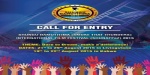
SHUNGU NAMUTITIMA INTERNATIONAL FILM FESTIVAL (SHUNAFFoZ) 2015
Vilole Images Productions (VIP) is glad to invite filmmakers to submit docuentaries, short films and full-length feature films to the Shungu Namutitima (Smoke That Thunders) International Film Festival of Zambia (SHUNAFFoZ). The festival will run from Friday 21st to Saturday 29th August 2015 in LIVINGSTONE and from Wednesday 19th to Saturday 22nd August 2015 in KABWE. Deadline for submissions is Monday 22nd June 2015. Celebrating the 10th Anniversary, under the theme ''DARE TO DREAM, MAKE A DIFFERENCE'', the festival will accept Zambian and African films for competition. However, films from all over the world are for screening only. The 10th anniversary will introduce another special award - the Artists Rights Award
Read moreFeatured Video
Visitors Counter


|
Today | 128 |

|
Yesterday | 1858 |

|
This week | 1986 |

|
Last week | 10247 |

|
This month | 5326 |

|
Last month | 44630 |

|
All days | 626767 |
Your IP: 54.173.35.129
,
Today: Dec 04, 2017