SHUNAFFoZ (Festival) 2012
- 1
- 2





Clear sound mixes for multilingual Zambian films
Language carries the character, history and emotional temperature of a Zambian story. Getting the mix right in multilingual Zambian cinema is not cosmetic; it shapes whether viewers understand a joke, recognise a warning, follow a family dispute or feel the rhythm of a performance. In a multilingual production, the final mix must make every language audible without making the soundtrack feel engineered or artificial.
This matters especially when films move beyond Lusaka to online audiences in Sydney, Melbourne and other Australian cities. Viewers may encounter Bemba, Nyanja/Chewa, Tonga, Lozi, Kaonde or Lunda through subtitles, an English dub or the original soundtrack. A successful mix preserves those distinctions, supports accurate dialogue editing and leaves room for the music, ambience and silence that give each setting its identity.
Put dialogue at the centre
A clear mix begins with performance, not with a preset. Editors should choose takes based on intelligibility, emotion and consistency, while retaining natural differences in pace and accent. If two performers overlap because the scene is crowded or urgent, the mix should clarify the narrative without erasing the tension. Automated level matching can help identify peaks, but it cannot decide which voice carries the essential information.
Vilole Images Productions’ Kitwe documentary projects illustrate why local context belongs in the sound process. Copperbelt stories may move between workshops, markets, transport routes and homes, where each space has its own noise profile. Record clean dialogue whenever possible, but keep production references that reveal whether a line was spoken near machinery, under a roof or with an accent shaped by the community.
A usable deliverable then needs measured levels, clean edits and phase checks, followed by monitoring across cinema and smaller screens. Listening on good equipment remains essential, as headphones can expose hiss and reveal edits concealed by a large cinema system, while a television or phone may expose harshness and inconsistent low-frequency effects.
Handle code-switching without flattening voices
Zambian multilingualism often includes code-switching within a sentence, not simply separate dialogue blocks. A character may move from one language into another to signal intimacy, authority, humour or distance. Treat every switch as a deliberate dramatic beat. Keep the original phrasing and timing; replacing it with a generic line can change the relationship even when the plot remains intact.
During dialogue editing, catalogue exchanges by language, speaker, location and emotional intensity. This helps editors maintain a stable hierarchy: important words should remain prominent, while natural overlaps can sit lower and still colour the scene. Background performers, radio broadcasts, songs and announcements also need contextual levels. A language heard only in the distance may function as atmosphere, whereas a line carrying the scene’s central decision needs complete intelligibility.
Build dubbing and subtitles for real audiences
Subtitles and dubbing are not interchangeable fixes. Subtitles retain the actors’ voices and cultural texture, while dubbing gives audiences continuous access to dialogue in their preferred language. A multilingual mix should therefore be prepared as a master that supports both routes. The English version needs room for translated meaning and altered syllable counts, while the original-language version must remain emotionally convincing before either treatment is added.
In Sydney and Melbourne, culturally diverse communities and established arthouse circuits create audiences comfortable moving between languages. Multilingual film events, SBS programming and subtitled streaming releases can widen that access, but only if the presentation respects the source. Australian viewers often read subtitles while commuting on trains or trams, often with earbuds and a phone held close, so timing, contrast and legibility need to survive compressed audio and a small display.
Australia’s film-classification legislation gives the Australian Classification Board responsibility for content classification, but it does not prescribe a universal dialogue level or mix. Screen Australia’s qualifying-content framework also makes subtitled and dubbed theatrical versions relevant to local funding and distribution goals. More information about VIP production services can help teams plan these deliverables alongside development and post-production rather than treating them as last-minute extras.
Adapt mixes across screens and spaces
The listening environment changes across Australia’s city and suburban markets. Open-plan homes, shared flats, traffic, neighbours and household appliances can compete with quiet dialogue, while many viewers stream on televisions, laptops and phones with earbuds connected. A mix that relies on extremely soft whispers or deep effects may disappear in real homes. Dialogue should remain anchored, but the soundtrack should also tolerate normal compression and platform normalisation without sounding forced.
Cinema audiences expect a different scale, yet they are not a separate audience in every sense; films discussed on social media and streaming platforms may be heard first on a phone. Editors should check the same scene on calibrated cinema monitoring, a consumer television and a phone, with and without headphones. Deliver the full mix, M&E stem and isolated dialogue where the distributor requires them, and confirm subtitle timing against the final edit rather than an earlier rough cut.
Keep music, place and cultural detail
Music and ambience need a place in the dialogue hierarchy without being pushed so far back that they lose their narrative function. A traditional song, church choir, workshop rhythm or street announcement may signal identity, memory or collective action. Clear licensing, accurate attribution and collaboration with the communities represented are as important as clean recording. When music moves from a diegetic performance to a score, the transition should feel motivated rather than like an arbitrary level change.
Place sounds complete the same balance. The hum of a provincial bus, a copper mine, rain on a zinc roof or voices in a market can orient viewers more precisely than generic library effects. Record or document authentic textures where feasible, then use them selectively so that atmosphere supports rather than masks dialogue. Silence also requires editing judgement: removing every pause can make a conversation feel breathless and can erase meaning carried by hesitation or interruption.
This integrated approach benefits from communication across the whole production chain. The wider Vilole Images Productions portfolio connects development, pre-production, production and post-production, while its completed work shows how sound, stories and festival presentation reinforce each other. A sound editor should attend the shoot when possible, flag location noise, obtain clean references and review the picture lock with the director and dialogue team before final delivery.
| Version | Main audience benefit | Audio approach | Critical check |
|---|---|---|---|
| Original-language mix | Preserves cultural texture and authentic performance | Balance dialogue with music, effects and ambience | Intelligibility within each scene |
| English dub | Provides continuous access for English-speaking viewers | Re-record with translated intent and matched performances | Lip synchronisation and emotional equivalence |
| Subtitled version | Retains source voices while clarifying the story | Keep the original mix and time captions to the final edit | Reading pace, timing and contrast |
| M&E track | Supports localised versions and flexible distribution | Combine music and effects without dialogue | Ensure atmospheric elements do not obscure the intended result |
Clear sound mixing lets multilingual Zambian cinema cross borders without asking its stories to lose their voices. It gives Australian viewers access to the nuances of the original performances while giving Zambian audiences a mix that works in theatres, homes and headphones. At SHUNAFFoZ, those technical choices become part of the cultural encounter: every language is heard as intentional, every silence has shape, and every transition carries meaning.
Submit eligible documentaries, short films or feature-length films to SHUNAFFoZ, or bring a multilingual project to Vilole Images Productions for development and post-production support. Bring your next project to Vilole Images Productions and deliver work ready for dedicated festival audiences and the broad Australian public.
SHUNAFFOZ 2016 Entry Form
Featured Articles
- 1
- 2

SHUNGU NAMUTITIMA INTERNATIONAL FILM FESTIVAL (SHUNAFFoZ) 2015
Vilole Images Productions is glad to invite filmmakers to submit documentaries, short films and full-length films to the Shungu Namutitima International Film Festival of Zambia (SHUNAFFoZ). The festival will run from Friday 21st to Saturday 29th August 2015 in Livingstone and from Wednesday 19th to Saturday 22nd August 2015 in Kabwe. Deadline for submissions is Monday 22nd June 2015. Celebrating the 10th Anniversary, under the theme ''DARE TO DREAM, MAKE A DIFFERENCE'', the festival will accept Zambian and African films in competition. However, films from all over the world are for screenings ONLY. the 10th Anniversary will introduce another special award - the Artists Rights Award.
Read more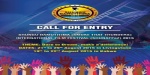
SHUNGU NAMUTITIMA INTERNATIONAL FILM FESTIVAL (SHUNAFFoZ) 2015
Vilole Images Productions (VIP) is glad to invite filmmakers to submit docuentaries, short films and full-length feature films to the Shungu Namutitima (Smoke That Thunders) International Film Festival of Zambia (SHUNAFFoZ). The festival will run from Friday 21st to Saturday 29th August 2015 in LIVINGSTONE and from Wednesday 19th to Saturday 22nd August 2015 in KABWE. Deadline for submissions is Monday 22nd June 2015. Celebrating the 10th Anniversary, under the theme ''DARE TO DREAM, MAKE A DIFFERENCE'', the festival will accept Zambian and African films for competition. However, films from all over the world are for screening only. The 10th anniversary will introduce another special award - the Artists Rights Award
Read moreFeatured Video
Visitors Counter


|
Today | 128 |

|
Yesterday | 1858 |

|
This week | 1986 |

|
Last week | 10247 |

|
This month | 5326 |

|
Last month | 44630 |

|
All days | 626767 |
Your IP: 54.173.35.129
,
Today: Dec 04, 2017