SHUNAFFoZ (Festival) 2012
- 1
- 2



Writing Dialogue That Speaks in Zambian Tongues
Zambia is home to more than seventy living languages, and the country's emerging screen sector has begun to reflect that abundance in ways that older generations of audiences rarely saw in local cinemas. Dialogue written for Zambian audiences must navigate tonal systems, politeness registers, and idiomatic expressions that rarely survive a straight translation into English. For producers looking to reach both domestic viewers and the Zambian diaspora abroad, the script becomes the single most important cultural document on set, more decisive than camera placement or score.
Australian screen professionals have spent decades working through comparable questions on productions filmed in Pitjantjatjara, Tok Pisin-influenced English, and the Greek and Italian dialects that surface in suburb dramas from Footscray to Marrickville. The craft lessons that emerged in those settings travel well, and they offer a useful reference point for writers approaching Bemba, Nyanja, Tonga, Lozi, Lunda, or Kaonde for the first time.
What follows is a working field guide drawn from the realities of Zambian film development, with cross-references to Australian production culture where the parallels are strongest. It is written for screenwriters, dialogue coaches, directors, and producers who want their characters to sound like the people they are meant to represent.
The Linguistic Landscape of Zambian Cinema
A feature film set in Lusaka's Matero compound will not sound like one filmed in the fishing villages of Siavonga, even when both are written in Nyanja. Vocabulary, borrowed English terms, and the speed at which speakers code-switch between local language and English all shift with geography, generation, and the formality of the scene. Writers who treat a language as a single block often produce dialogue that sounds stilted to native speakers and confusing to anyone who knows the language casually.
A useful starting point is to decide, for each main character, a first language, a level of schooling, and a relationship to urban life. These three data points predict around eighty percent of how a character will actually speak. A retired teacher in a Lunda-speaking region will default to formal constructions, insert English civic vocabulary, and avoid the playful shortenings used by teenagers in Lusaka's night markets. A market trader who grew up in a multilingual household will mix freely, and the rhythm of the dialogue should reflect that.
The shift from radio drama to filmed storytelling has also changed how writers handle long monologues. In radio, an extended reflection in eloquent Bemba is a pleasure; on screen, the same passage asks a viewer to watch a still face for too long. Effective film dialogue in Zambian languages is therefore tighter, more fragmented, and more reliant on reaction shots than its radio cousin. The writer's ear has to learn what sounds like music and what sounds like a lecture.
Capturing Tone and Register in Vernacular Speech
Every Zambian language carries a politeness architecture that English speakers tend to flatten. Bemba, for instance, marks respect through prefix changes, and the wrong prefix can turn a warm exchange into an accidental insult. A young character addressing an elder in a chief's courtyard is using a different linguistic toolkit than the same character gossiping with peers behind the market stalls. Good dialogue keeps those registers visible without drawing attention to them.
Idiom is the next battleground. Phrases like "umfwa mwiindi" in Tonga or the layered proverbs that surface in Lozi court narratives carry centuries of context. A literal translation into subtitles usually flattens them, and a free adaptation can drift into something the character would never say. Writers who grew up hearing these phrases have an instinct for which idioms can be bent for dramatic purposes and which must stay intact. Writers who did not should consult early, often, and on the page, not just on set.
Humor is another register that requires care. Zambian comedy leans on timing, repetition, and the dry understatement that audiences at events like the Shungu Namutitima International Film Festival of Zambia recognise instantly. The first-timer festival experience of one recent writer, for example, included a masterclass on how a single pause between a setup and a punchline can carry a Bemba joke across a mixed-language audience. That kind of rhythm does not write itself; it is rehearsed, written, and rewritten.
Subtitling, Lip-Sync, and the Visual Contract
Once dialogue is locked, the next craft challenge is the visual contract between mouth, line, and subtitle. Zambian languages include clicks, labialised consonants, and vowel systems that English subtitles cannot directly represent. The standard solution has been to write subtitles in English for international audiences and in dominant local languages for domestic release, with a glossary kept by the dialogue coach to resolve disputes on set.
Lip-sync becomes a real issue only when a scene is shot silent and looped later, a practice that remains common for safety reasons near water or in vehicle work. The temptation to record a clean English track and translate later is strong, but it strips the production of the very texture that audiences came for. A short silent reaction shot inserted between two spoken lines often solves the problem more cheaply and with more character than any looped take.
Subtitle placement is also a creative decision, not a technical afterthought. SBS in Australia has shown, through decades of subtitling Greek, Vietnamese, Mandarin, and Arabic programming, that font, position, and line breaks shape how a viewer hears a performance. Zambian productions preparing for festival circuits abroad can borrow from that visual language, treating the subtitle as a design element that respects both the language on screen and the reader's eye.
Working With Multilingual Casts and Community Storytellers
The most reliable way to write convincing dialogue in a Zambian language is to write it with people who speak that language as their first. This sounds obvious, yet many scripts arrive on set already translated into Bemba or Nyanja by a writer working alone in a hotel room in Sydney or Perth. The result is dialogue that passes a basic comprehension test but fails the cultural one, the way a French character written by someone who learned the language from textbooks can sound polite and entirely off-key to a Parisian.
Community storytellers, choral singers, and church leaders often hold the natural rhythms of a language in their bodies, and a short workshop with a small group of such contributors can reshape a script faster than any number of rewrites. Writers should also plan for the on-set language lead, a role Australian productions have formalised as the cultural consultant. On Zambian sets, this person becomes the final court of appeal for any line that the director, actors, and dialogue coach cannot agree on.
Budgets are tight across the Zambian industry, and the temptation to skip the consultant on a short film is real. The cost of getting dialogue wrong, however, is paid later in confused audiences, awkward festival Q&As, and a reputation that travels faster than any press release. A single paid reading session during pre-production usually costs less than a single re-shoot day.
Lessons From Australia's Multilingual Screen Sector
Australia offers a useful mirror for Zambian writers, because the country's screen sector has wrestled with similar questions across very different languages. The Greek and Italian communities of Melbourne produced dramas in the 1960s and 1970s that still circulate on community television, and they offer a record of what worked and what wore thin. The lesson is consistent: audiences forgive imperfect subtitles, but they do not forgive dialogue that pretends to be in a language the writer does not actually understand.
Melbourne's Footscray and Brunswick suburbs, Brisbane's West End, and Sydney's inner west have all hosted micro-productions that combined English with Greek, Vietnamese, Tagalog, and Somali. These productions, often produced for under fifty thousand dollars, found audiences through word of mouth and through broadcasters willing to program them. Screen Australia's development notes on language-led storytelling, along with state agency support through Film Victoria and Screen NSW, have quietly built a template that Zambian producers can adapt, including a willingness to fund dialogue workshops rather than only finished screenplays.
Australian audiences have also shown that they will watch subtitles patiently when the story earns them. A Bemba-language short that screens at the Melbourne International Film Festival, for instance, will find a curious and generous audience provided the craft is honest. That openness is itself a resource, and it is one reason international festivals matter to a small national cinema.
Practical Guidance for Writers Working in Zambian Languages
- Build a character sheet for every speaking role that includes first language, schooling, region, and code-switching habits, and refer to it before each rewrite.
- Read each scene aloud with a native speaker before locking the script, even when the writer is a native speaker themselves.
- Keep a living glossary of idioms, proverbs, and culturally specific references, and mark which ones are load-bearing for the plot.
- Treat subtitles as a design layer, not a translation afterthought, and budget time for a separate subtitle pass by a fluent writer.
- Hire a cultural consultant as early as possible, ideally during development rather than on the first day of shoot.
- Plan for the festival and broadcast context from the opening scene, because the audience's relationship to the language changes the line.
- Keep the door open for unscripted refinements on set, since actors often find phrasings that no writer could have produced at a desk.
If you are developing a Zambian-language feature or short, the Vilole Images Productions platform is a useful starting point for understanding the current production slate, the partner organisations involved, and the calls for submission that shape each festival season. The work of writing dialogue that sounds like the people it represents is slow, attentive, and never quite finished, and it begins with a single well-written line that a real speaker would actually say.
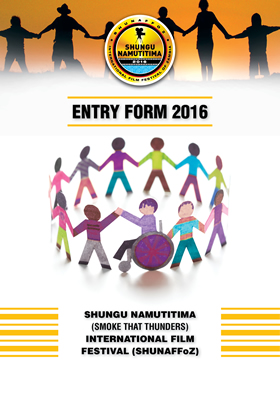
SHUNAFFOZ 2016 Entry Form
Featured Articles
- 1
- 2

SHUNGU NAMUTITIMA INTERNATIONAL FILM FESTIVAL (SHUNAFFoZ) 2015
Vilole Images Productions is glad to invite filmmakers to submit documentaries, short films and full-length films to the Shungu Namutitima International Film Festival of Zambia (SHUNAFFoZ). The festival will run from Friday 21st to Saturday 29th August 2015 in Livingstone and from Wednesday 19th to Saturday 22nd August 2015 in Kabwe. Deadline for submissions is Monday 22nd June 2015. Celebrating the 10th Anniversary, under the theme ''DARE TO DREAM, MAKE A DIFFERENCE'', the festival will accept Zambian and African films in competition. However, films from all over the world are for screenings ONLY. the 10th Anniversary will introduce another special award - the Artists Rights Award.
Read more
SHUNGU NAMUTITIMA INTERNATIONAL FILM FESTIVAL (SHUNAFFoZ) 2015
Vilole Images Productions (VIP) is glad to invite filmmakers to submit docuentaries, short films and full-length feature films to the Shungu Namutitima (Smoke That Thunders) International Film Festival of Zambia (SHUNAFFoZ). The festival will run from Friday 21st to Saturday 29th August 2015 in LIVINGSTONE and from Wednesday 19th to Saturday 22nd August 2015 in KABWE. Deadline for submissions is Monday 22nd June 2015. Celebrating the 10th Anniversary, under the theme ''DARE TO DREAM, MAKE A DIFFERENCE'', the festival will accept Zambian and African films for competition. However, films from all over the world are for screening only. The 10th anniversary will introduce another special award - the Artists Rights Award
Read moreFeatured Video
Visitors Counter


|
Today | 128 |

|
Yesterday | 1858 |

|
This week | 1986 |

|
Last week | 10247 |

|
This month | 5326 |

|
Last month | 44630 |

|
All days | 626767 |
Your IP: 54.173.35.129
,
Today: Dec 04, 2017