SHUNAFFoZ (Festival) 2012
- 1
- 2



Crafting Zambian Horror With N’gongola Mwaba
Zambian horror is finding a sharper place in African cinema, drawing on spiritual belief, family memory, urban anxiety and the unsettling silence of rural landscapes. In conversation with filmmaker N’gongola Mwaba, the genre emerges as more than a collection of ghosts and sudden shocks. It becomes a way to examine what communities remember, what families conceal and how old stories survive modern life.
Mwaba’s approach is grounded in atmosphere. A flickering light, an empty road or a familiar voice heard from the wrong room can create a deeper unease than elaborate special effects. The fear comes from recognising the setting and then sensing that something within it has changed.
For Australian viewers, this kind of storytelling may feel both foreign and familiar. A horror film set around Lusaka, the Copperbelt or a remote village can carry the same intimate tension found in Australian stories about isolated farmhouses, bush tracks and houses where everyone knows the family history. The cultural details differ, yet the emotional machinery is recognisable.
The conversation also points to a wider opportunity for Zambian filmmakers. With festivals, digital platforms and international genre audiences seeking distinctive voices, local horror can travel without losing its identity. Mwaba’s craft offers a useful lens for understanding how that journey might happen.
Fear Begins With Place
Mwaba describes location as one of the first creative decisions in a horror production. The setting should carry a history before the audience understands the plot. An old house, a neglected mine settlement or a quiet compound at the edge of a city can suggest previous lives, unfinished conflicts and dangers that have never been properly named.
That principle is especially powerful in Zambia, where the landscape can shift quickly from busy urban streets to open country. A story may begin with traffic, music and conversation before moving into a place where the usual social protections disappear. The contrast creates tension without requiring a large budget.
Australian audiences understand the value of such contrasts. A film moving from inner-city Melbourne to the outskirts of the Dandenong Ranges, or from a Sydney suburb to an isolated coastal road, can make ordinary geography feel threatening. Even the casual phrase “no worries” can become unsettling when a character says it while ignoring something plainly wrong.
For Mwaba, realism gives supernatural events their force. The audience should believe in the room, the family and the social rules before the film asks them to believe in a haunting. Once that foundation is secure, a small disturbance can carry considerable weight.
Tradition, Belief And Modern Anxiety
The interview places Zambian folklore at the centre of the creative process, while avoiding the idea that tradition is simply a source of monsters. Mwaba treats belief as a living part of community life. A warning from an elder, a ritual obligation or a story about an ancestor may shape a character’s choices long before anything visibly supernatural occurs.
This approach allows horror to explore conflict between generations. Younger characters may dismiss inherited beliefs, then discover that modern education, mobile phones or city life cannot answer every question. Older characters may know more than they are willing to explain, creating a silence that becomes as frightening as any apparition.
The strongest cultural horror also avoids turning local customs into exotic decoration. Details should affect the plot, relationships and consequences. If a character breaks a taboo, the audience needs to understand what that act means within the character’s world, rather than seeing it as a mysterious ritual inserted for atmosphere.
Mwaba’s perspective connects with the way Australian filmmakers have used Indigenous and regional storytelling, although the histories and responsibilities are different. For producers working across cultures, the lesson is clear: research, consultation and respect must guide the use of spiritual material. A frightening story loses power when its cultural foundations feel borrowed or careless.
Building Suspense Without Excess
A central part of Mwaba’s method is restraint. The camera does not need to show every threat. Sometimes a locked door, a missing object or a character refusing to enter a familiar room can keep viewers more alert than a graphic reveal. Suspense grows through controlled information: what the audience knows, what the characters misunderstand and what remains just outside the frame.
Sound becomes especially important in this style of filmmaking. Footsteps, distant singing, an electrical hum or the sudden absence of ordinary night sounds can transform a scene. In a modest production, careful sound recording and post-production may contribute more to fear than expensive visual effects.
The same principle matters in the Australian market, where genre films compete for attention across cinemas, streaming services and festival programmes. Audiences watching on a laptop in Brisbane or with headphones on a train from Parramatta still respond to rhythm, silence and a strong point of view. A well-made low-budget film can travel when its atmosphere is precise.
Mwaba also emphasises performance. Horror depends on people behaving credibly under pressure. The fear in a parent’s face, a friend’s forced laugh or a character’s sudden refusal to speak can tell the audience that something is wrong before the script explains it.
A Practical Route From Script To Screen
Developing a horror film requires more than a striking premise. The script must establish rules, character motivation and escalation. If the supernatural force can do anything at any time, suspense disappears. Mwaba’s craft lies in giving the threat boundaries, even when those boundaries are gradually revealed.
Pre-production is where many of those decisions become practical. Locations need to support the mood, while production design must make rooms feel inhabited before they become frightening. Lighting plans, costume choices and movement through space can quietly prepare the audience for a later shock.
Filmmakers exploring the wider Zambian screen industry can follow local production work through Vilole Images Productions. The organisation’s work across development, production and post-production reflects the collaborative structure needed to move an ambitious genre idea from a first draft to a finished film.
For filmmakers in Australia, the comparison with local production is useful. A project may pass through Screen Australia, state agencies, producer networks, co-production discussions and festival labs before reaching viewers. Zambian creators face their own funding and infrastructure realities, but both markets reward projects with a clear voice, a realistic production plan and a strong reason for existing.
Where Zambian Horror Can Travel
Genre offers an effective route into international conversation because horror audiences are active, loyal and curious about unfamiliar settings. A Zambian film does not need to imitate Hollywood conventions to connect with viewers. Its strongest advantage may be the chance to present fears shaped by local history, family structures, belief systems and contemporary social change.
Industry visibility remains important. Filmmakers seeking a platform for documentary, short-form or feature work can consult the SHUNAFFoZ submission guide, which explains the kind of festival pathway available through Zambia’s international screen community. For a horror project, a festival screening can provide reviews, programmer relationships and conversations with distributors.
Australian audiences are already receptive to international genre cinema through events such as the Melbourne International Film Festival, Sydney Film Festival and genre-focused programmes. A Zambian horror feature could appeal to viewers who enjoy films that bring a strong sense of place, whether they describe them as “a bit full-on”, “proper eerie” or simply too unsettling to watch alone.
Mwaba’s work also sits within a growing creative field. Readers wanting a broader view of the country’s filmmaking voices can explore Zambian directors to watch. Horror does not exist separately from the rest of the industry; it benefits from actors, editors, cinematographers and producers building confidence across every kind of story.
Elements That Make The Atmosphere Work
- A recognisable location with an unsettling history
- Silence and sound used with deliberate rhythm
- Cultural beliefs connected to character decisions
- A supernatural threat with clear limits
Questions Behind A Strong Horror Film
- What does the central character fear losing?
- Which family secret changes the meaning of the past?
- What can the audience understand before the characters do?
- How will the story remain culturally specific for international viewers?
Mwaba’s ideas suggest that Zambian horror is strongest when it trusts its own foundations. The genre can be frightening through an empty corridor, a half-finished conversation or a road that should be familiar but suddenly feels wrong. It can also carry social observation, cultural memory and personal grief without losing the pleasure of suspense.
For Australian viewers and industry professionals, the appeal lies in that combination of intimacy and difference. The story may come from Lusaka, a village or a mining town, yet its questions about family, secrecy and belonging cross borders. Explore the work of Vilole Images Productions and follow SHUNAFFoZ to discover the filmmakers shaping Zambia’s next wave of cinema.
SHUNAFFOZ 2016 Entry Form

Featured Articles
- 1
- 2


SHUNGU NAMUTITIMA INTERNATIONAL FILM FESTIVAL (SHUNAFFoZ) 2015
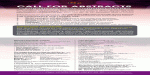
Vilole Images Productions is glad to invite filmmakers to submit documentaries, short films and full-length films to the Shungu Namutitima International Film Festival of Zambia (SHUNAFFoZ). The festival will run from Friday 21st to Saturday 29th August 2015 in Livingstone and from Wednesday 19th to Saturday 22nd August 2015 in Kabwe. Deadline for submissions is Monday 22nd June 2015. Celebrating the 10th Anniversary, under the theme ''DARE TO DREAM, MAKE A DIFFERENCE'', the festival will accept Zambian and African films in competition. However, films from all over the world are for screenings ONLY. the 10th Anniversary will introduce another special award - the Artists Rights Award.
Read more
SHUNGU NAMUTITIMA INTERNATIONAL FILM FESTIVAL (SHUNAFFoZ) 2015
Vilole Images Productions (VIP) is glad to invite filmmakers to submit docuentaries, short films and full-length feature films to the Shungu Namutitima (Smoke That Thunders) International Film Festival of Zambia (SHUNAFFoZ). The festival will run from Friday 21st to Saturday 29th August 2015 in LIVINGSTONE and from Wednesday 19th to Saturday 22nd August 2015 in KABWE. Deadline for submissions is Monday 22nd June 2015. Celebrating the 10th Anniversary, under the theme ''DARE TO DREAM, MAKE A DIFFERENCE'', the festival will accept Zambian and African films for competition. However, films from all over the world are for screening only. The 10th anniversary will introduce another special award - the Artists Rights Award
Read moreFeatured Video
Visitors Counter


|
Today | 128 |

|
Yesterday | 1858 |

|
This week | 1986 |

|
Last week | 10247 |

|
This month | 5326 |

|
Last month | 44630 |

|
All days | 626767 |
Your IP: 54.173.35.129
,
Today: Dec 04, 2017