SHUNAFFoZ (Festival) 2012
- 1
- 2





How to Create an Effective Film Budget-Raising Plan for NGOs
An effective film fundraising plan turns a production ambition into a financed project. It shows what the film will cost, which costs each funder can legitimately cover, when money is needed, and how the organisation will deliver both creative work and public value.
For an NGO, the challenge extends beyond finding enough cash. Restricted grants, donor conditions, programme overheads, community participation, safeguarding and long-term reporting all affect the real funding requirement. A realistic model therefore links the production schedule to a cash-flow forecast and a transparent stewardship plan.
A strong plan also treats distribution as part of sustainability rather than an afterthought. It anticipates revenue, rights, audience growth and reuse without counting speculative income as certain. The result is a clear route from story development to screened work, with fewer costly gaps between funding rounds.
Why the budget and funding plan must work together
The film budget is the detailed cost of delivering a defined film: development, pre-production, production, post-production, distribution and overhead. The fundraising plan explains who will provide each amount, under what conditions, and when. Keeping those documents linked prevents a persuasive proposal from becoming an unfundable schedule.
For an NGO, distinguish restricted income from unrestricted funding. A grant may cover cameras and travel but not staff salaries, while unrestricted funds can absorb essential gaps. Cost centres, approval thresholds and programme rules should therefore be visible in every funding request.
Use stage gates to control exposure. A script development tranche can unlock a pilot; pilot evidence can support a production application; and a commissioning or sponsor agreement can justify final delivery. Release later money only when the preceding milestone, contract and approval requirements are satisfied.
Build a defensible film cost estimate
Begin with a scene breakdown, shooting schedule, crew structure and delivery specification. Seek quotes for the largest costs—director, producer, cast, camera, lighting, sound, locations, travel, editing, music, insurance and distribution—and document the assumptions behind each one. This turns estimates into an auditable cost basis rather than a round number.
Local research can materially improve a cross-border estimate. As low-budget filmmaking in Lusaka explains, familiarity with local rates, transport, power, permit processes and supplier capacity can reveal savings without undervaluing crews or creating hidden risks. Confirm whether quotations exclude taxes, contingency and later changes.
Build two views: a full-cost budget showing the true economic requirement, and a cash budget showing exactly when funds must arrive. Include community consultation, translation, consent, accessibility, data protection and safeguarding where relevant. A contingency of roughly 10–15% may be reasonable for a controlled documentary, but scope and location risk should determine the final figure.
Match each cost to the right funding source
A resilient funding mix usually combines institutional grants, philanthropy, corporate or community sponsorship, public or broadcaster co-production, in-kind support and carefully verified distribution income. Assign a specific source to each cost wherever possible. Broad labels such as “partners” or “events” weaken accountability and make donors wonder what gap remains.
Production partners can contribute more than a service line. Vilole Images Productions illustrates a full pathway from development and pre-production through production, post-production and showcasing completed work. An NGO can use a qualified partner to test deliverables and capacity while recording partner fees properly as production costs, overhead or an in-kind contribution.
Check restrictions, brand fit and reputational risk before approaching sponsors. Corporate support may provide cash, equipment, location access or marketing reach, but it rarely aligns with every public-interest goal. Do not promise editorial control, guaranteed audience numbers or a charitable tax deduction unless the arrangement genuinely supports those claims.
Present a persuasive case for support
Build a concise investment case around the problem, the people affected, the proposed film, the production plan and the change it can support. A strong funder should understand the ask in minutes. State the total cost, amount secured, amount still sought, production dates, audience, territories and the reason additional funding is needed at this stage.
Replace vague impact claims with evidence. Combine community or beneficiary input, relevant research, realistic reach assumptions and defined outcomes such as policy discussion, changed practice or sustained campaign use. If an activity is difficult to measure, define proxy indicators and the reporting method. Honest assumptions build more trust than inflated projections.
Set out delivery, reporting and accountability. Name the producer, responsible programme lead, approval process and schedule for updates or audits. For sponsors, specify logo treatment, content acknowledgements and deliverables without compromising participant privacy or editorial integrity. A transparent risk register should also show how the team will respond if a location, contributor or exchange rate changes.
Navigate the Australian funding landscape
Australian funding routes deserve separate treatment. Producers commonly approach Screen Australia and state agencies such as Screen NSW, Film Victoria and Screen Queensland, subject to current eligibility, co-production and matching-funding rules. Melbourne and Sydney are major commissioning hubs, while Brisbane has a distinct production network. A Zambian-led or international-impact film may need an Australian co-producer, distributor or impact partner rather than relying on a domestic grant alone.
Australian pitches generally work best in plain, direct language. A friendly “no worries” can open an introductory conversation, but reviewers still expect a precise budget, named responsibilities and measurable results. Eligible charities can use donation mechanisms that provide tax receipts, whereas corporate sponsorship does not automatically qualify for a tax deduction. Confirm current arrangements before publishing a financial claim.
Distribution assumptions should reflect how the market actually pays. For audiences in Australia and the wider Zambian diaspora, future of Zambian streaming is a useful reference on platform windows and commercial pathways. Build conservative scenarios around commissioning, streaming, educational licences, festivals and community screenings, and avoid counting platform algorithms as guaranteed income.
Test viability, risks and cash flow
A funding plan becomes credible when it passes a simple test: can the organisation fund the next committed activity, meet existing obligations and still deliver the film’s core outcomes?
| Area | Budget-only approach | Fundraising-ready approach |
|---|---|---|
| Scope | One production total | Full cost by phase, programme and restriction |
| Income | Broad funding target | Named sources, amounts, conditions and confidence |
| Timing | Shoot and delivery dates | Deposits, milestones and cash gaps |
| Risk | Generic contingency | Triggers, owners and downside actions |
| Evidence | Internal estimates | Quotes, letters, agreements and reporting dates |
| Impact | Outputs and deliverables | Outcomes, audience use and measurement method |
Create a base case, a stretch case and a downside case. Apply conservative exchange-rate assumptions to Australian dollars and local currencies, and distinguish committed income from likely or aspirational income. A milestone plan should show when deposits are due, which costs they cover and what evidence releases the next tranche.
Use monthly cash-flow reviews and defined approval thresholds. Record changes to scope, schedule and funding, then explain their effect on the funding gap. Board or finance oversight should focus on exceptions, restricted-fund compliance and delivery risk, while the creative team retains a documented process for prioritising changes.
Turn the plan into action
Use the model as a weekly decision tool, not a document prepared once for a funding round. Assign an owner to every source, deadline, approval and risk, and review progress with the same discipline applied to production.
- Define the story, format, schedule and audience before final cost requests.
- Link each cost centre to eligible funding and a named next action.
- Secure a small core of committed funds before scaling production commitments.
- Prepare a one-page case, evidence pack and clear budget narrative for each audience.
- Recheck cash flow, restrictions and reporting dates after every material change.
Start this week by naming a project lead and creating one shared budget-and-funding model. Confirm the first three milestones, circulate a short internal brief and schedule the first funder approach. A disciplined plan gives the NGO a clearer negotiating position, protects production continuity and turns a compelling film idea into a deliverable public outcome.
SHUNAFFOZ 2016 Entry Form

Featured Articles
- 1
- 2


SHUNGU NAMUTITIMA INTERNATIONAL FILM FESTIVAL (SHUNAFFoZ) 2015
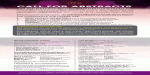
Vilole Images Productions is glad to invite filmmakers to submit documentaries, short films and full-length films to the Shungu Namutitima International Film Festival of Zambia (SHUNAFFoZ). The festival will run from Friday 21st to Saturday 29th August 2015 in Livingstone and from Wednesday 19th to Saturday 22nd August 2015 in Kabwe. Deadline for submissions is Monday 22nd June 2015. Celebrating the 10th Anniversary, under the theme ''DARE TO DREAM, MAKE A DIFFERENCE'', the festival will accept Zambian and African films in competition. However, films from all over the world are for screenings ONLY. the 10th Anniversary will introduce another special award - the Artists Rights Award.
Read more
SHUNGU NAMUTITIMA INTERNATIONAL FILM FESTIVAL (SHUNAFFoZ) 2015
Vilole Images Productions (VIP) is glad to invite filmmakers to submit docuentaries, short films and full-length feature films to the Shungu Namutitima (Smoke That Thunders) International Film Festival of Zambia (SHUNAFFoZ). The festival will run from Friday 21st to Saturday 29th August 2015 in LIVINGSTONE and from Wednesday 19th to Saturday 22nd August 2015 in KABWE. Deadline for submissions is Monday 22nd June 2015. Celebrating the 10th Anniversary, under the theme ''DARE TO DREAM, MAKE A DIFFERENCE'', the festival will accept Zambian and African films for competition. However, films from all over the world are for screening only. The 10th anniversary will introduce another special award - the Artists Rights Award
Read moreFeatured Video

Visitors Counter


|
Today | 128 |

|
Yesterday | 1858 |

|
This week | 1986 |

|
Last week | 10247 |

|
This month | 5326 |

|
Last month | 44630 |

|
All days | 626767 |
Your IP: 54.173.35.129
,
Today: Dec 04, 2017