SHUNAFFoZ (Festival) 2012
- 1
- 2






Building a film portfolio as a Zambian director
A strong portfolio gives people a clear reason to trust your creative judgement. For a Zambian film director, it should show more than finished videos. It should reveal how you develop an idea, work with performers and crew, respond to limited resources, and translate local experience into a story that can travel.
Your portfolio may be viewed by producers in Lusaka, festival programmers abroad, television commissioners, cultural organisations, or potential collaborators in Australia. Each audience will look for different evidence, yet all of them need to understand your voice quickly. A carefully selected body of work can make a short film, documentary, music video, or community project feel like part of a coherent career.
Australia is a useful market to consider because it has active independent film networks, public funding bodies, broadcasters, and festivals. A producer in Sydney, a programmer in Naarm (Melbourne), or a regional organisation in Queensland may be interested in Zambian stories, provided your materials are professional, accessible, and specific about what you bring to a project.
Start with a clear creative identity
Begin by defining the subjects, moods, and communities that recur in your work. You might be drawn to youth culture in Lusaka, family histories, faith, migration, environmental change, traditional ceremony, or the tension between urban ambition and rural responsibility. These interests form your creative identity, even if you work across fiction, documentary, and branded content.
Write a short director’s statement of around 100 to 150 words. Explain what you notice, why you make films, and how your Zambian perspective shapes your storytelling. Avoid broad claims about “giving people a voice”. Name the people, places, questions, and visual choices that matter to you. A specific statement sounds more confident than a grand one.
Your portfolio should then support that statement with three to five carefully chosen projects. Quality and relevance matter more than quantity. If one film demonstrates your work with actors, another shows documentary observation, and a third proves you can manage a commercial brief, explain that range without making the selection feel scattered.
Turn local stories into strong evidence
Local knowledge is a creative advantage when it is handled with care. A film set in a compound, market, village, school, church, or family home can carry details that an outside production team may miss. Sound, language, clothing, humour, food, public transport, and everyday rhythms can give your work an unmistakable sense of place.
Include a short note beside every project. State the title, year, format, running time, your role, production partners, and a two- or three-sentence synopsis. Add the director’s intention and one practical achievement, such as completing a night shoot with a small crew, working in Bemba and English, or gaining permission to film within a sensitive community.
When you have permission, include a link to the complete film. If the work is private, provide a password-protected screener and a short trailer. Credit cinematographers, editors, producers, actors, composers, and community collaborators accurately. A director’s portfolio shows leadership, but it should also demonstrate respect for the people who helped make the work possible.
Organisations such as Vilole Images Productions can also help place your work within Zambia’s wider film ecosystem, particularly through production activity, industry relationships, screenings, and festival opportunities. Referencing relevant development or festival experience gives your profile more context than a list of isolated online uploads.
Build a portfolio that travels
Australian viewers do not need every cultural reference explained, but they do need enough context to engage with the story. Add subtitles to films where dialogue may be unfamiliar, and check them carefully for names, idioms, locations, and meaning. A short glossary or director’s note can clarify language without flattening the culture into an academic explanation.
Think about how your materials will be received in places such as Western Sydney, Brisbane, Adelaide, or regional New South Wales. These communities include African diaspora audiences, multicultural arts organisations, universities, and independent cinemas. A Zambian story may connect through shared experiences of migration, family responsibility, faith, work, and belonging, while still retaining its own cultural identity.
Research the Australian industry before approaching it. Screen Australia supports national production and development, while state bodies such as VicScreen and Screen Queensland operate within their own funding and location systems. Many programmes require an Australian producer or eligible applicant, so your portfolio should make collaboration easy rather than implying that an overseas director already meets every funding condition.
Include practical information about your availability, preferred roles, travel requirements, and ability to work remotely. If you are seeking a co-production, state whether you need development support, a local producer, post-production facilities, or festival distribution. Clear information saves time and signals that you understand how projects move from artistic interest to contracts, schedules, and delivery.
Make your work easy to discover
A portfolio website should load quickly and work well on a mobile phone. Put your strongest project near the top, followed by a concise biography, director’s statement, selected filmography, still images, press mentions, awards, and contact details. A busy homepage can hide good work, so use generous spacing and straightforward navigation.
Your showreel should usually run for one to two minutes. Open with an image or moment that communicates your strongest quality, whether that is performance direction, visual composition, documentary access, or rhythm. Do not fill it with every project. A shorter reel with clear credits is more memorable than a long montage with no context.
Social platforms can bring programmers and collaborators to the portfolio, but they should support the work rather than replace it. Create a consistent profile name, use the same professional photograph or logo, and keep project descriptions consistent across Instagram, Vimeo, YouTube, LinkedIn, and festival platforms. For a practical approach to audience-building, review this guide to social media campaigns and adapt its ideas to the scale of your film.
Be careful with music, photographs, and clips that you do not own. Australian festivals, funders, and broadcasters may ask for proof of rights, releases, insurance, or classification information. Keep a private folder containing contracts, permission forms, subtitle files, posters, stills, press quotes, and high-resolution master files so you can respond quickly when someone requests materials.
Use collaborations and festivals strategically
A festival screening can validate your work, but the festival itself should fit your goals. Look for events that programme African cinema, short films, documentaries, emerging directors, diaspora stories, or socially engaged work. Zambia’s Shungu Namutitima International Film Festival of Zambia, known as SHUNAFFoZ, is particularly relevant to filmmakers who want to present work within a Zambian and international festival setting.
Do not send the same message to every programmer. Read the festival’s submission rules, identify films with a similar audience, and write a brief note explaining why your project belongs there. Mention its language, running time, premiere status, and any restrictions. Keep a record of submission dates, fees, decisions, laurels, and screening links.
Collaboration can strengthen a portfolio when the role is clearly defined. Work with a producer who can manage budgets, a cinematographer who understands your visual plan, or an editor who can shape a disciplined cut. In Australia, an introduction through a film society, African community organisation, university screen programme, or festival may be more useful than a cold message to a large production company.
Ask collaborators for accurate credits and short testimonials after delivery. A producer might describe your preparation, an actor might comment on your communication, and an editor might highlight your ability to make decisive choices. These statements should support the work, not substitute for it. Your films remain the central proof of your ability.
Review the portfolio every six months. Remove work that no longer represents your standards, update festival selections, replace weak stills, and add new skills only when you can demonstrate them. A growing director’s profile should feel current, focused, and honest about the level of production behind each project.
Choose three strong projects, prepare clean screeners, write a precise director’s statement, and publish the portfolio where collaborators can reach it. Then submit thoughtfully to SHUNAFFoZ, Australian festivals, diaspora arts networks, and suitable production partners. Each finished film can become a stronger step towards the next opportunity when its story, craft, credits, and purpose are presented with confidence.
SHUNAFFOZ 2016 Entry Form

Featured Articles
- 1
- 2


SHUNGU NAMUTITIMA INTERNATIONAL FILM FESTIVAL (SHUNAFFoZ) 2015
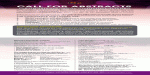
Vilole Images Productions is glad to invite filmmakers to submit documentaries, short films and full-length films to the Shungu Namutitima International Film Festival of Zambia (SHUNAFFoZ). The festival will run from Friday 21st to Saturday 29th August 2015 in Livingstone and from Wednesday 19th to Saturday 22nd August 2015 in Kabwe. Deadline for submissions is Monday 22nd June 2015. Celebrating the 10th Anniversary, under the theme ''DARE TO DREAM, MAKE A DIFFERENCE'', the festival will accept Zambian and African films in competition. However, films from all over the world are for screenings ONLY. the 10th Anniversary will introduce another special award - the Artists Rights Award.
Read more
SHUNGU NAMUTITIMA INTERNATIONAL FILM FESTIVAL (SHUNAFFoZ) 2015
Vilole Images Productions (VIP) is glad to invite filmmakers to submit docuentaries, short films and full-length feature films to the Shungu Namutitima (Smoke That Thunders) International Film Festival of Zambia (SHUNAFFoZ). The festival will run from Friday 21st to Saturday 29th August 2015 in LIVINGSTONE and from Wednesday 19th to Saturday 22nd August 2015 in KABWE. Deadline for submissions is Monday 22nd June 2015. Celebrating the 10th Anniversary, under the theme ''DARE TO DREAM, MAKE A DIFFERENCE'', the festival will accept Zambian and African films for competition. However, films from all over the world are for screening only. The 10th anniversary will introduce another special award - the Artists Rights Award
Read moreFeatured Video

Visitors Counter


|
Today | 128 |

|
Yesterday | 1858 |

|
This week | 1986 |

|
Last week | 10247 |

|
This month | 5326 |

|
Last month | 44630 |

|
All days | 626767 |
Your IP: 54.173.35.129
,
Today: Dec 04, 2017